Alcohol and snoring
Late drinks are a classic snoring amplifier because alcohol relaxes the throat and can stuff up the nose. Here is the mechanism, what meta-analyses show for snoring and sleep apnea, how to time or cut evening alcohol, and when airway muscle training still matters on dry nights.


Quick answer
Yes - alcohol often makes snoring louder and sleep breathing worse. It relaxes upper-airway muscles, can engorge nasal tissue, and fragments sleep architecture. Mayo Clinic lists alcohol near bedtime among the main lifestyle causes of snoring and tells people with obstructive sleep apnea not to drink close to bed.
Meta-analysis of polysomnography studies found alcohol nights raised the apnea-hypopnea index by about 4 events per hour and lowered the worst oxygen saturation by about 2.7% versus control. Separate epidemiological reviews link higher alcohol use with higher sleep-apnea risk. Cutting or delaying drinks is a high-leverage first step - and still not a full substitute for evaluation when apnea red flags are present.
How alcohol triggers snoring
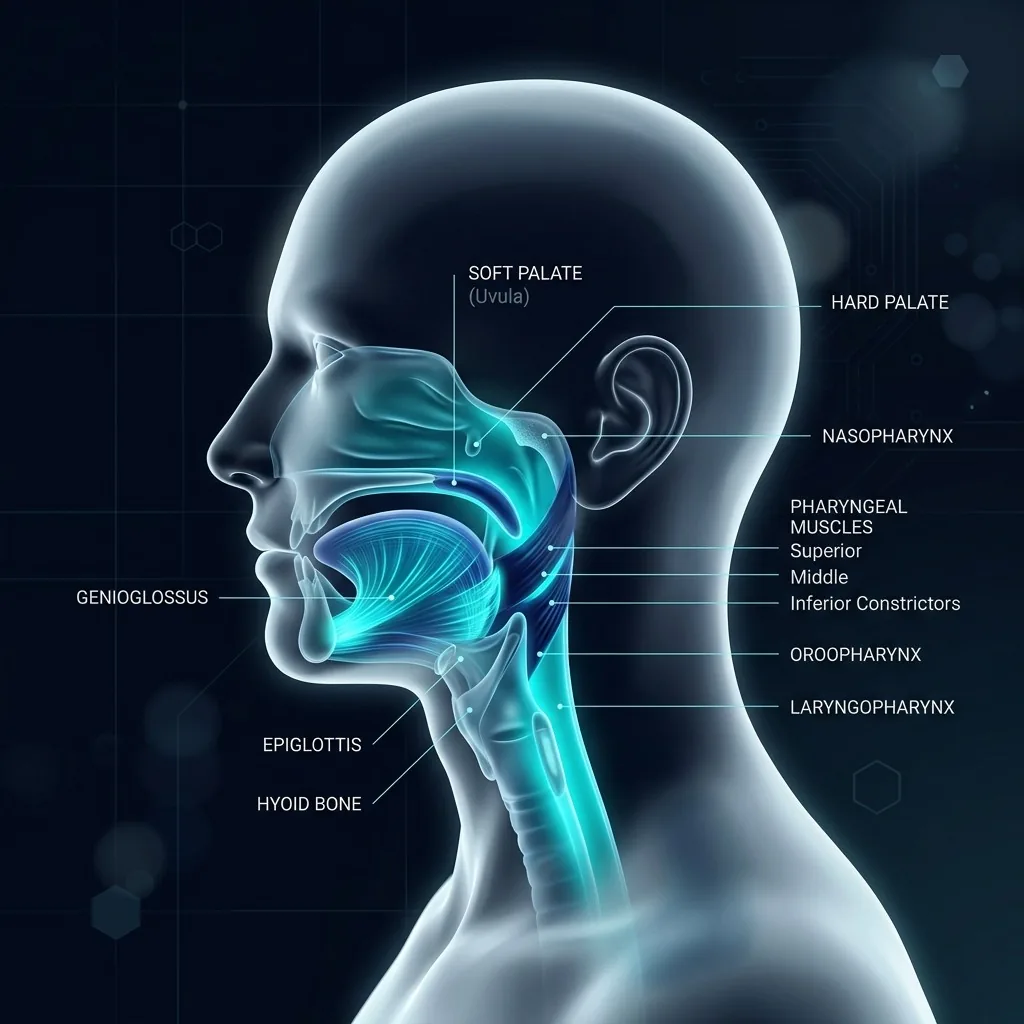
Snoring is vibrating soft tissue in a narrowed airway. Sleep already lowers tone in the tongue, soft palate, and pharyngeal walls. Alcohol adds a second drop in tone, so the same anatomy that was quiet on a dry night can flutter after drinks. That is why partners so often report: "You only snore when you drink."
Sleep-medicine clinicians also see the "swollen uvula after a big night" pattern: heavy snoring turns the soft palate and uvula into a punching bag. The sound lives in the throat; a stuffy nose from alcohol just makes you open the mouth and stack more collapse on top.
Primary snoring driver
Throat and soft-palate relaxation
Alcohol is a central nervous system depressant and muscle relaxant. When tone drops further in the tongue, soft palate, and pharyngeal walls, the airway narrows and tissue vibrates more easily. Mayo Clinic lists this as a core reason alcohol brings on snoring.
Common add-on insult
Nasal engorgement and mouth breathing
Many people get stuffier after drinks. A blocked nose forces mouth breathing, which drops the jaw and tongue and stacks on top of already-relaxed throat tissue. Clinicians who treat snoring often describe this as a perfect storm night.
Worse architecture, not better rest
Sedation mistaken for sleep
Alcohol can help you lose consciousness faster, but that is sedation, not normal sleep onset. Sleep science coverage of nightcaps emphasizes fragmented sleep later in the night and reduced REM. Fragmented, shallow sleep keeps the upper airway unstable for longer stretches.
Louder vibration risk
Dehydration and dry tissues
Alcohol is a diuretic. A drier mouth and throat can make soft tissue more prone to noisy vibration. Hydration alone will not fix collapse, but dry mucosa is one more reason "drunk snoring" sounds harsher.
What the studies show
Clinic guidance and trial data point the same direction. Mayo Clinic states that alcohol relaxes throat muscles and decreases natural defenses against airway obstruction, and that people with OSA should avoid alcohol close to bedtime.
A 2020 systematic review and meta-analysis in Otolaryngology-Head and Neck Surgery (Burgos-Sanchez and colleagues; PMID 32513091) pooled 13 polysomnography studies (279 patients). Versus control nights, alcohol was associated with a mean AHI increase of about 4.0 events per hour and a lowest oxygen saturation drop of about 2.7 percentage points. The authors concluded alcohol worsens snoring severity, sleep architecture, AHI, and oxygen lows in susceptible people.
On population risk, a 2018 meta-analysis (Simou and colleagues; PMID 29458744) estimated that higher alcohol consumption raised sleep-apnoea risk by about 25% (RR 1.25, 95% CI 1.13-1.38), with heterogeneity and evidence of publication bias. A separate 2018 meta-analysis on lifestyle associations (Taveira and colleagues; PMID 29971810) found alcohol use linked to higher OSA odds (OR about 1.33), while noting low-to-very-low certainty overall.
Bottom line: the "drinks make snoring worse" story is not folklore. Dose, timing, and your baseline airway still matter, and not every study finds a large effect at modest intakes. For people who already sit near the snoring or OSA threshold, evening alcohol is a high-yield lever to turn down.
Who is most affected by alcohol and snoring
Nights when alcohol is the loudest trigger
- You (or a partner) mainly notice snoring after drinks, not every night
- Primary snoring without gasping, choking, or severe daytime sleepiness
- You already sleep better on your side and worse on your back
- You can shift drinks earlier and keep a 3-4 hour buffer before bed
Limited benefit from cutting drinks alone
- You snore loudly most nights with zero alcohol
- Moderate-to-severe untreated obstructive sleep apnea
- Major nasal blockage, large tonsils, or jaw/airway anatomy issues
- Regular sedatives, opioids, or muscle relaxants stacking on top of alcohol
See a clinician first if...
- Gasping, choking, or witnessed pauses in breathing
- Morning headaches, resistant high blood pressure, or severe daytime sleepiness
- You need alcohol most nights to fall asleep
- A partner says you stop breathing even on alcohol-free nights
Practical tips if you drink and snore
Leave a real buffer before bed
If you drink, finish earlier so blood alcohol is falling by lights-out, not peaking as you fall asleep. A single early drink is not risk-free, but it is usually kinder to the airway than several drinks in the last hour.
Do not use alcohol as a sleep aid
Sedation is not restorative sleep. People with insomnia who self-medicate with nightcaps often get faster knockout and worse second-half sleep. Fix sleep timing, light, and stress first; treat insomnia without alcohol when you can.
Stack non-alcohol levers the same night
Side sleep, clear the nose if it is blocked, skip heavy late meals that worsen reflux, and keep a regular sleep window. Alcohol plus back sleep plus congestion is the classic bad stack.
Train airway tone on the days between drinks
Cutting alcohol removes a relaxant. Tongue, soft-palate, and throat exercises raise baseline muscle tone so the airway holds better even when nightly tone drops. That is the durable piece a hangover cannot train.
This is not medical advice about alcohol use disorder. If cutting back feels hard, or you need drinks to sleep most nights, talk with a clinician. Safer sleep and safer drinking are both health issues, not willpower lectures.
Expert videos on alcohol, snoring, and sleep
Demonstration and clinician framing only. Clinical claims on this page are grounded in the Sources list, not in video captions.
ADVENT (sleep/ENT clinicians) - throat-source snoring, alcohol as a muscle-tone issue, swollen uvula after heavy nights, and nasal engorgement stacking with mouth breathing.
Matt Walker, PhD with Andrew Huberman - why nightcaps are sedation not sleep, sleep fragmentation, REM reduction, and why "one glass with dinner" still shows measurable architecture effects.
Dr. Brian Murphy - short clinician myth-bust: alcohol acts like an airway anaesthetic/relaxant, similar in kind to other sedatives that make soft-palate flutter worse.
VitalSleep - plain-language walkthrough of jaw/throat relaxation, dry mouth, and why even modest late drinks can raise snoring and apnea risk.
Premier Health clinician - hospital-style snoring causes ladder: anatomy, congestion, weight, alcohol muscle relaxation, and side-sleep as a first fix.
When airway exercises still help
Skipping late drinks removes a temporary muscle relaxant. It does not rebuild the tongue and soft-palate strength you lose with age, mouth breathing, or chronic snoring. If you still snore on dry nights - or only partly improve after cutting alcohol - the tissues themselves may need training.
Randomized trials of tongue, palate, and throat exercise programs reduced snoring metrics (Ieto 2015) and improved OSA outcomes versus sham (Guimaraes 2009). A myofunctional therapy meta-analysis (Camacho 2015) found pooled reductions in snoring and apnea-hypopnea index. These programs do not license heavy drinking, and they do not replace CPAP or medical care for significant apnea.
A practical stack for many alcohol-triggered snorers: dry or earlier drinks for immediate quieter nights, side sleep so gravity is not stacking with low tone, and a short daily airway routine so the tongue and soft palate hold better even when life includes an occasional pour. Explore related guides on tongue exercises, soft-palate drills, and throat exercises.
Airway Trainer turns those drills into a guided daily session so dry nights are not your only lever.
When to see a doctor first
Cutting evening alcohol is safe advice for most healthy adults, but quieter nights after dry weeks are not the same as ruling out obstructive sleep apnea. Get evaluated - do not only skip wine - if you have:
- Gasping, choking, or witnessed pauses in breathing
- Loud snoring on alcohol-free nights with daytime sleepiness
- Morning headaches or resistant high blood pressure
- Feeling unable to sleep without alcohol most nights
Alcohol timing, side sleep, nasal care, oral appliances, CPAP, and airway exercises each solve different pieces. Match the tool to the cause after a real assessment when red flags are present.
Sources
- Mayo Clinic. Snoring: Symptoms and causes.
Clinical overview: alcohol before bed relaxes throat muscles and reduces natural defenses against airway obstruction; avoiding alcohol close to bedtime is a standard lifestyle step for snoring. - Mayo Clinic. Obstructive sleep apnea: Diagnosis and treatment.
Lifestyle guidance for OSA: alcohol and some sedatives can worsen obstructive sleep apnea and daytime sleepiness; do not drink alcohol close to bedtime. - Burgos-Sanchez C, et al. Otolaryngol Head Neck Surg. 2020 Dec;163(6):1078-1086. PMID: 32513091.
Systematic review and meta-analysis (13 PSG studies, 279 patients): alcohol nights raised AHI by about 4 events/hour vs control and lowered lowest oxygen saturation by about 2.7%; alcohol was linked with worse snoring severity and altered sleep architecture in susceptible people. - Simou E, et al. Sleep Med. 2018 Feb;42:38-46. PMID: 29458744.
Systematic review and meta-analysis of epidemiological studies: higher alcohol consumption was associated with about a 25% higher risk of sleep apnoea (RR 1.25, 95% CI 1.13-1.38); authors note publication bias and heterogeneity. - Taveira KVM, et al. J Oral Rehabil. 2018 Nov;45(11):890-902. PMID: 29971810.
Meta-analysis on OSA associations: alcohol use was positively associated with OSA (odds ratio about 1.33, 95% CI 1.10-1.62); overall certainty of evidence was low to very low. - Ieto V, et al. Chest. 2015 Sep;148(3):683-691. PMID: 25950418.
Randomized trial: oropharyngeal (airway) exercises reduced snoring frequency and snoring power in habitual snorers - a non-alcohol path to better airway tone. - Guimaraes KC, et al. Am J Respir Crit Care Med. 2009 May 15;179(10):962-968. PMID: 19234106.
Randomized trial: daily upper-airway exercises improved obstructive sleep apnea severity and snoring versus sham control. - Camacho M, et al. Sleep. 2015 May 1;38(5):669-675. PMID: 25348130.
Meta-analysis of myofunctional therapy for OSA: pooled trials show meaningful reductions in snoring and apnea-hypopnea index.
Alcohol and snoring: FAQs
Does alcohol cause snoring?
Yes for many people. Alcohol relaxes throat muscles and can worsen nasal congestion, which narrows the airway and makes soft tissue vibrate. Mayo Clinic lists alcohol before bed as a classic snoring trigger. A 2020 meta-analysis of polysomnography studies found alcohol nights associated with worse snoring severity, higher apnea-hypopnea index, and lower oxygen lows in susceptible people.
Why do I only snore when I drink?
You may sit just above the snoring threshold when sober. A few drinks drop muscle tone further, so the tongue and soft palate collapse enough to vibrate. Partners often report "only after wine" patterns. That pattern is real, but it does not prove you never have quieter airway problems on dry nights - especially if you also sleep on your back or have nasal blockage.
Does alcohol make sleep apnea worse?
It often does. Mayo Clinic advises people with obstructive sleep apnea not to drink close to bedtime because alcohol can worsen OSA and sleepiness. Epidemiological meta-analyses associate higher alcohol use with higher OSA risk (about 25% in one pooled estimate; elevated odds in another). A PSG-focused meta-analysis found alcohol raised AHI by roughly 4 events/hour and lowered lowest saturation by about 2.7% versus control nights. Individual response still varies by dose, timing, and baseline anatomy.
How long before bed should I stop drinking to reduce snoring?
There is no single safe cutoff that works for everyone. Metabolism depends on body size, sex, liver function, and how much you drank. A practical rule many clinicians use: avoid alcohol close to bedtime and leave several hours when you can. For people with known OSA, the safer default is to skip evening alcohol entirely on nights when breathing quality matters most.
Is one glass of wine OK if I snore?
It depends on your baseline. Some people only snore after heavier nights; others notice a single late drink is enough. Sleep researchers measuring architecture still see measurable REM and fragmentation effects from modest evening alcohol. If snoring is already a relationship or health problem, treat late alcohol as an experiment you can turn off for 1-2 weeks and compare partner reports or a snore app.
Can airway exercises help if alcohol is my main trigger?
They help different parts of the problem. Cutting or delaying alcohol removes a nightly muscle-relaxant. Oropharyngeal and myofunctional exercises try to raise baseline tongue, palate, and throat tone so collapse is less likely even when tone drops in sleep. Randomized trials (Ieto 2015, Guimaraes 2009) and a myofunctional therapy meta-analysis (Camacho 2015) support exercise programs for snoring and selected OSA cases. Exercises do not cancel out heavy drinking, and they are not a substitute for evaluation when apnea red flags are present.
When should I see a doctor about alcohol-related snoring?
See a clinician if you gasp or choke, have witnessed breathing pauses, severe daytime sleepiness, morning headaches, resistant high blood pressure, or loud snoring even on dry nights. Also get help if you feel dependent on alcohol to fall asleep. Quieter nights after skipping drinks are useful data, not proof that obstructive sleep apnea is absent.
Quieter nights take more than skipping one pour
Dry or earlier drinks remove a relaxant. Airway Trainer handles the daily tongue, palate, and throat work that keeps the airway stiffer when muscle tone drops - the piece alcohol timing alone cannot train.
Related reading: Best sleeping position for snoring · Does mouth taping work? · Oropharyngeal exercise studies