Nasal breathing
exercises
Nasal breathing exercises retrain nose-only airflow and the tongue posture that keeps the mouth closed at night. That is a different job from general airway-muscle drills. Airway Trainer turns the retraining into short guided sessions, about 5 minutes a day. Free to start.




.webp)
Why nasal breathing exercises are different, and their real limits
The nose does something the mouth cannot: the paranasal sinuses continuously produce nitric oxide, and that gas only reaches the lungs on a nasal inhale. Nasally derived nitric oxide increases arterial oxygen tension and reduces pulmonary vascular resistance (Lundberg et al., Acta Physiologica Scandinavica 1996), an effect later confirmed in tracheotomized patients as specifically nasal in origin. That is the physiological case for practicing nose-only breathing rather than treating mouth versus nasal airflow as interchangeable.
Tongue posture is the other half of the job. In an adolescent cohort, tongue pressure declined in a clear order, highest in nasal breathers, lower in oronasal breathers, lowest in mouth breathers, and tongue pressure was the only significant independent variable in the model (Sano et al., Scientific Reports 2024). A tongue that rests against the palate helps keep the lips sealed and the airway nose-ready without effort. That is a posture habit, not a muscle-strength drill, which is why it is trained separately from throat-resistance exercises.
Be straight about the evidence gap: there is no large trial that tested "nasal breathing exercises" against snoring directly. The closest controlled evidence is for the same paced, breath-control style of practice, Buteyko-based retraining, in asthma, where a 4-week randomized trial found a significant improvement in quality of life and a significant reduction in reliever-inhaler use versus a placebo video (Opat et al., Journal of Asthma 2000). That supports the retraining method, not a snoring-specific outcome.
The bigger caveat is safety, not just evidence strength. A 2024 clinical trial that measured airflow directly in obstructive sleep apnea patients found closing the mouth helped moderate mouth-breathers but made airflow worse in patients who mouth-breathe heavily, likely because they were compensating for a genuinely obstructed nose (Yang et al., JAMA Otolaryngology-Head & Neck Surgery 2024). If congestion, a deviated septum, or enlarged adenoids is why you mouth-breathe, forcing nose-only breathing is the wrong first step. Get the obstruction checked by an ENT or allergist before making nasal breathing the goal.
Airway Trainer sequences the tongue-posture and paced-breathing drills into a short daily session so the retraining is guided rather than guesswork. If snoring comes with gasping, choking, or daytime exhaustion, screen your risk first with the free STOP-BANG tool and talk to a clinician. For airway-muscle and resistance work instead, see our breathing exercises for snoring program.
*Airway Trainer is a wellness app. It does not diagnose or treat disease. Consult a healthcare provider for diagnosed sleep apnea or persistent symptoms.
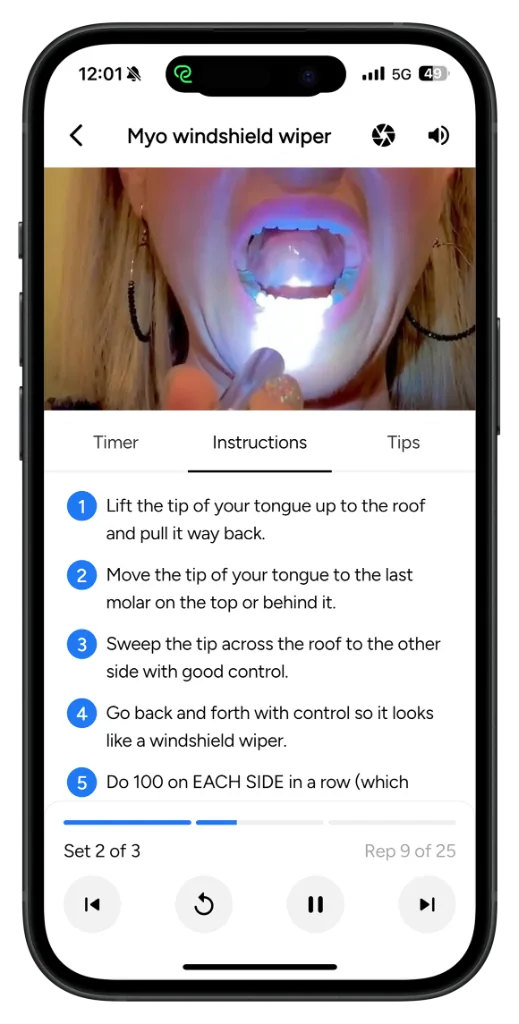
Tongue posture keeps the mouth closed at rest
Tongue pressure was the strongest independent predictor separating nasal breathers from mouth breathers in the adolescent cohort above. A tongue that sits against the roof of the mouth at rest holds the lips together without conscious effort, which is what actually keeps the airway on a nasal route through the night.
Airway Trainer guides resting tongue-posture drills separately from throat-muscle work, so you are training the habit that supports nose-only breathing, not just the muscles that resist collapse.
Paced sessions, not a habit you police yourself
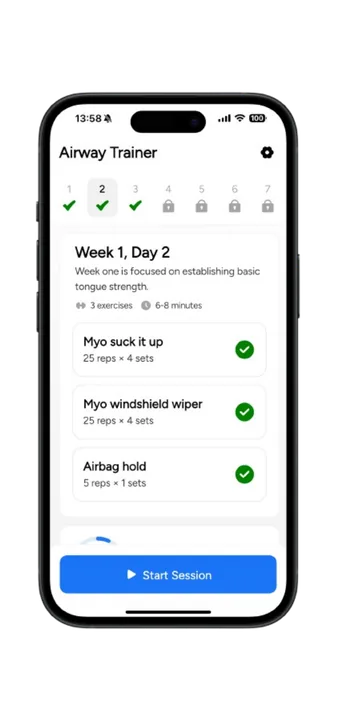
The best-evidenced version of this kind of breath retraining is paced and structured, not a vague instruction to "breathe through your nose more." The asthma trial above used a twice-daily video-guided session for four weeks. Airway Trainer applies the same paced-session structure to nasal breathing and tongue posture instead of asthma symptoms.
Sessions ramp gradually over weeks, and the app tracks completion so the habit stays visible instead of relying on willpower alone.
When a stuffy nose needs a doctor, not just practice
Mouth breathing is usually a symptom of an obstructed nose, not just a habit. Adenoid hypertrophy has a reported prevalence of 49.7% in pediatric populations (Zhang et al., Frontiers in Public Health 2024), and allergic rhinitis affects 10 to 30% of US adults and up to 40% of children (StatPearls, NCBI Bookshelf). Deviated septum and chronic sinus inflammation are common too.
If any of those apply to you, exercises alone will not fix the underlying obstruction, and forcing nose-only breathing can genuinely make airflow worse rather than better. See an ENT or allergist first, then use the retraining once the airway is actually clear.
Everything you need in one app
Related articles
Nasal breathing exercises FAQs
Do nasal breathing exercises stop snoring?
What are nasal breathing exercises?
Is nasal breathing training safe if my nose is blocked or stuffy?
How is this different from your breathing exercises for snoring page?
How long until nasal breathing exercises help?
Can nasal breathing exercises replace treatment for sleep apnea?
Start guided nasal breathing and tongue-posture retraining today, about 5 minutes a day, free to begin.