Snoring is damaging your airway muscles
Most people think of snoring as a symptom - a sign that something is wrong with the airway. New research published in June 2026 changes that picture. The vibrations from snoring physically damage the muscles that are supposed to keep your airway open, setting up a cycle that gets worse the longer it goes untreated. Here is what the science found, and what you can actually do about it.
1. What the June 2026 Umeå University research found
2. The vicious cycle: how snoring accelerates itself
3. Why this changes how we should think about snoring
4. Breaking the cycle with airway exercises
5. What exercises do to airway muscle cells
6. How this fits with the new treatments (sulthiame, CPAP)
7. What the evidence actually says you should expect
8. Frequently asked questions
Umeå University published landmark research in the journal Mitochondrion showing snoring vibrations directly damage airway muscle cells
adults are estimated to have obstructive sleep apnea - most without a diagnosis - and many are caught in this cycle without knowing it
of targeted airway exercises is the evidence-based dose shown to strengthen the muscles snoring gradually weakens
is the typical window in clinical trials for measurable reductions in snoring frequency and loudness from consistent exercise
What the new research found
For decades, the medical understanding of snoring treated it as a downstream effect. Something narrows the airway - obesity, jaw position, nasal obstruction, poor muscle tone - and the narrowed channel causes turbulent airflow, which causes vibration, which causes the sound. Snoring was the symptom. The airway problem was the cause.
A study published in June 2026 in the journal Mitochondrion by researchers at Umeå University in Sweden adds a significant wrinkle to that picture. The team, led by Per Stål and associate professor Farhan Shah, found that the vibrations from snoring are not just a passive consequence of a narrowed airway. They are an active stressor on the muscle cells that line that airway.
What the researchers found
- Snoring vibrations disrupt how muscle cells in the upper airway produce and manage energy - specifically by impairing mitochondrial function.
- This energy impairment reduces the cells' ability to sustain tone and resist mechanical stress.
- The researchers used both patient tissue samples and a newly developed laboratory model that mimics snoring vibrations, giving the findings strong methodological support.
- The work was published in Mitochondrion, Volume 91, 2026.
In associate professor Shah's words: "the vibrations themselves may contribute to the disease process by damaging muscle tissue and impairing cellular energy metabolism." That is a meaningful shift from snoring as symptom to snoring as contributing cause.
The vicious cycle: how snoring accelerates itself
The research gives a biological mechanism for something clinicians have long observed: snoring tends to get worse over time rather than staying the same. Here is why the new science suggests that happens.
You snore
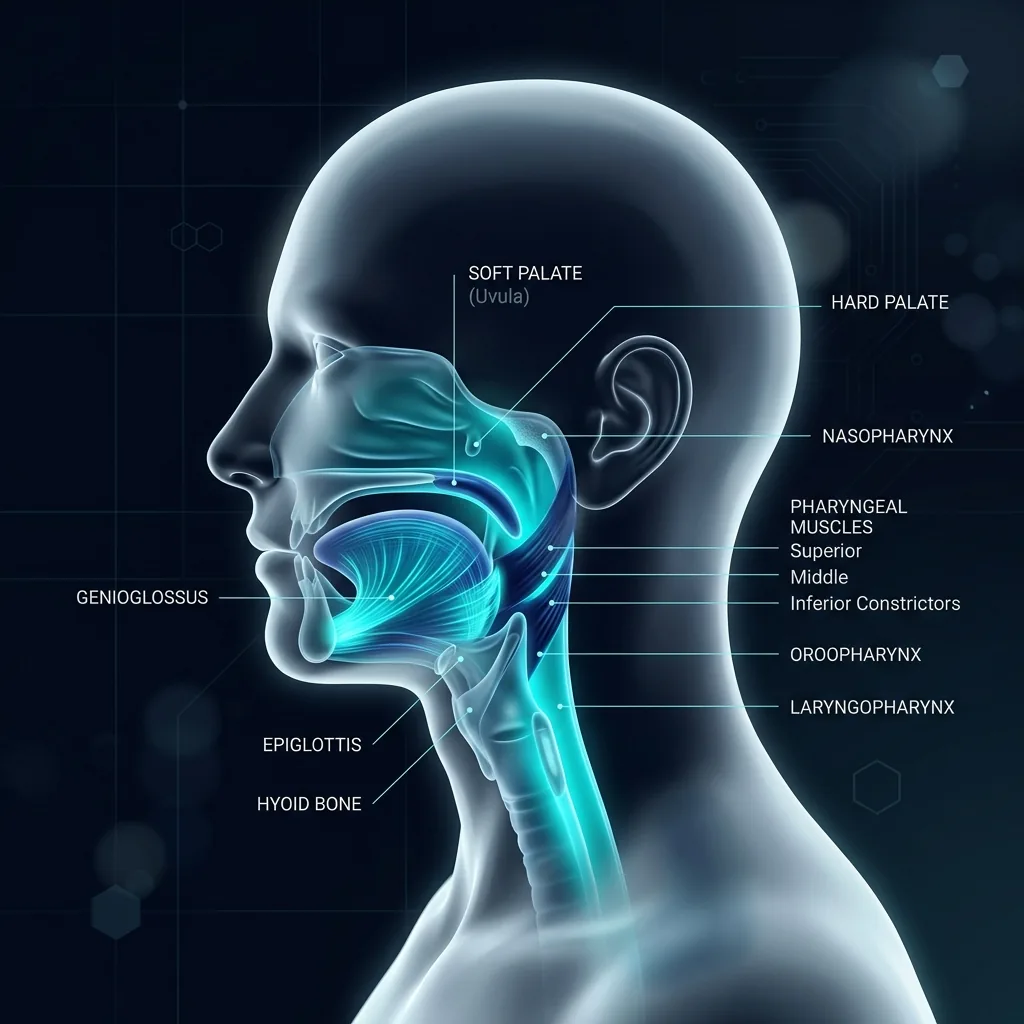
Air passing through a narrowed airway creates turbulent flow. The soft tissues - palate, uvula, tongue base - vibrate against each other, producing the familiar sound.
Vibrations damage muscle cells
The June 2026 Umeå University research shows these vibrations disrupt mitochondrial function in the muscle cells of the upper airway. The cells lose their ability to produce and manage energy efficiently.
Muscles grow weaker
Impaired energy metabolism means the muscles cannot maintain tone as well during sleep. The tongue, palate, and pharyngeal walls become more prone to sagging inward.
The airway narrows further
Weaker muscles hold the airway open less reliably. The gap narrows. Airflow becomes more turbulent. Breathing interruptions become more frequent or prolonged.
Snoring gets louder - and may become sleep apnea
More turbulence means more vibration. More vibration means more damage. The cycle accelerates. What started as a nuisance progresses toward a medical condition.
This is why untreated snoring rarely stays mild. The same mechanism that generates the sound is also gradually removing the tissue's ability to resist it.
Why this changes how we should think about snoring
The practical consequence of this research is that managing snoring is not just about quieting the noise for a bed partner. Reducing snoring frequency and intensity reduces the mechanical stressor that is damaging the airway from the inside - which matters for long-term airway health regardless of whether you have a diagnosed sleep disorder.
It also changes the logic of early intervention. The standard advice has been to wait for a diagnosis before doing anything significant. The new research suggests that the window between "mild snoring" and "early sleep apnea" is not neutral. The airway is already being damaged during that period. Treating snoring as a problem worth addressing in its own right, not only as an indicator of something else, becomes a more defensible position.
It also highlights the gap that no device or pill fully addresses. CPAP stops the airway from collapsing by applying pressure. Oral appliances reposition the jaw mechanically. Even the new sulthiame pill - currently in trials and not yet approved - targets the nervous system signals behind the collapse. None of them directly strengthen the damaged tissue. Exercises do.
The muscles are trainable
The Umeå research identifies the problem: snoring vibrations weaken the muscles that hold the airway open. Airway Trainer targets those same muscles with daily guided sessions designed to rebuild the tone that snoring removes.


Breaking the cycle: airway exercises
Oropharyngeal exercises - systematic training of the tongue, soft palate, and pharyngeal walls - are the only intervention that directly targets the muscles the Umeå research identified as being damaged. The evidence for their effect on snoring predates this research, but the research gives a clearer explanation of why they work.
A 2015 randomised controlled trial published in Sleep found that three months of daily oropharyngeal exercises reduced snoring frequency by 36% and total snoring power (a measure of loudness) by 59%. A 2023 Cochrane review confirmed that the evidence base supports them for reducing snoring in adults with mild to moderate obstructive sleep apnea. They will not cure severe apnea, but for most people who snore they address a real root cause.
The commitment required is modest: around ten minutes a day, every day, for at least three months. The exercises target specific muscle groups - tongue elevation and retraction, soft palate lifting, pharyngeal wall contraction - rather than generic jaw or face movements. The specificity matters, because the goal is to build tone in exactly the tissues the vibrations are weakening.
What exercises do to airway muscle cells
The mechanism runs in the opposite direction from the damage the Umeå research describes. Where snoring vibrations impair mitochondrial energy production, exercise training is one of the strongest known stimuli for mitochondrial adaptation.
Increase muscle tone
Repetitive contraction of the tongue, soft palate, and pharyngeal muscles builds sustained resting tone - the same quality that lets trained athletes hold correct form without conscious effort.
Counter the damage
Exercises stimulate mitochondrial adaptation - the opposite of what snoring vibrations cause. Trained muscles produce energy more efficiently, which makes them more resistant to the cellular damage the Umeå research identified.
Reduce airway collapse during sleep
Stiffer, better-toned tissue narrows the airway less when muscle control drops during sleep. Less narrowing means less turbulence, less vibration, and quieter breathing.
Improve CPAP compliance
A 2023 clinical study found that patients who combined oropharyngeal exercises with CPAP used the machine an average of 6.0 hours per night, versus 4.9 hours in the control group - a difference that significantly affects treatment outcomes.
The net effect is a tissue that is better able to hold the airway open during sleep, less likely to vibrate at the intensities that cause cumulative damage, and more resilient against whatever muscle weakening the next night of snoring brings.
How this fits with other treatments
The Umeå research does not replace existing treatment guidelines. CPAP remains the gold standard for established moderate to severe obstructive sleep apnea. The new sulthiame pill - which reduced breathing pauses by up to 47% in a Phase 2 trial published in The Lancet in March 2026 - targets brain-level breathing signals and may eventually offer a meaningful pharmaceutical option, once Phase 3 trials and regulatory review are complete.
Exercises fit alongside all of these rather than instead of them. For people with mild snoring, they are often the appropriate first step - treating a root cause without a device or prescription. For people on CPAP, the research showing improved compliance with exercises suggests a practical reason to add them. For people waiting on the sulthiame pill or weighing up the Inspire implant, exercises are the intervention available right now.
For a fuller overview of every treatment currently available or approaching availability, see our guide to new sleep apnea and snoring treatments in 2026.
What the evidence actually says you should expect
- Exercises address a root cause rather than muffling the noise or applying mechanical force.
- The new research gives a clear biological reason why they work: they counter the mitochondrial damage snoring causes.
- No prescription, no device, no side effects - and they pair well with every other treatment.
- Evidence shows measurable results within three months of consistent daily practice.
- Results take weeks to appear. Exercises are not an overnight fix.
- They will not replace CPAP for established moderate or severe sleep apnea.
- Consistency matters - a few sessions a week produces less benefit than daily practice.
- The Umeå research is very new: long-term clinical trials on reversing vibration damage have not been completed yet.
Start before the damage compounds
The Umeå research shows the window between 'mild snoring' and 'early sleep apnea' is not neutral - the airway is being weakened throughout. Airway Trainer guides short daily sessions that build the muscle tone to interrupt that process.
Frequently asked questions
What did the new research actually show?
Researchers at Umeå University in Sweden used patient tissue samples and a laboratory model that mimics snoring vibrations. They found that the mechanical stress from those vibrations disrupts how muscle cells manage energy - specifically, how their mitochondria function. Impaired mitochondria cannot fuel sustained muscle contraction as effectively, which may explain why the soft tissues of the upper airway gradually lose tone in people who snore chronically. The findings were published in the journal Mitochondrion in June 2026 by a team led by Per Stål and associate professor Farhan Shah.
Does this mean snoring actually causes sleep apnea?
The research suggests snoring is not only a symptom of a narrowed airway - the act of snoring itself may actively worsen the underlying problem over time. That does not mean everyone who snores will develop sleep apnea, but it does add biological evidence to explain why people who snore tend to see their symptoms progress rather than stay stable. Associate professor Shah put it plainly: "the vibrations themselves may contribute to the disease process by damaging muscle tissue and impairing cellular energy metabolism."
Can airway exercises reverse the muscle damage from snoring?
That is the logical implication of the research, though direct long-term trials have not yet measured reversal. What we know from existing oropharyngeal exercise research is that consistent daily practice reduces snoring frequency and loudness in clinical trials, and that trained muscles show improved mitochondrial adaptation - which is the opposite of what snoring vibrations cause. The mechanism is plausible and the practical evidence is solid, even if the specific reversal question awaits further study.
How long before airway exercises make a difference?
Most clinical trials run for three months and show meaningful results by that point. Individual timelines vary with snoring severity and exercise consistency. Some people notice changes in the first few weeks; others take longer. The key variable is daily practice - ten minutes a day, every day, rather than occasional longer sessions.
Should I see a doctor about my snoring?
If your snoring is loud, if a bed partner has witnessed you gasping or stopping breathing, or if you wake unrefreshed and exhausted during the day, get evaluated for sleep apnea before self-treating. Those are warning signs that exercises alone are not the right first step. If your snoring is mild and the warning signs are absent, airway training is a low-risk starting point - and it pairs well with everything a clinician might add.
What is the sulthiame pill and when will it be available?
Sulthiame is a repurposed epilepsy drug that reached headlines in March 2026 when a Phase 2 trial published in The Lancet showed it reduced breathing pauses in sleep apnea by up to 47% in the highest dose studied. It works by stabilising breathing signals in the brain rather than acting on the muscles directly. It is not approved yet - a Phase 3 trial would be needed before regulatory review. For more detail on the full treatment landscape, see our guide to new sleep apnea and snoring treatments in 2026.
Does this mean I need to stop snoring completely to protect my muscles?
The research points to chronic, repeated vibration as the damaging factor - not occasional snoring. The practical goal is to reduce snoring frequency, loudness, and severity rather than achieve silence at all costs. Exercises that strengthen the airway muscles help on both fronts: they reduce snoring and they build the tissue resilience that makes the muscles more able to tolerate the mechanical stress that remains.
Medical disclaimer: this article is for educational purposes and does not replace medical advice. The Umeå University research cited (Mitochondrion, 2026) is peer-reviewed but represents early-stage mechanistic findings; long-term clinical trials on reversing snoring-induced muscle damage have not been completed. Loud snoring with gasping, witnessed pauses in breathing, or significant daytime sleepiness should be evaluated by a clinician before any self-treatment.