Considering Airway Gym? Try Airway Trainer free first.
Both apps teach the same family of mouth and throat exercises for snoring. The difference is targeting. Airway Gym hands every user the same fixed protocol. Airway Trainer pinpoints the exact weak points contributing the most to your snoring and builds a personalized 6-week plan around them. Free to download on iPhone and Android.


Why people pick Airway Trainer
average user rating
people training their airway
Daily routine
5-10 min
guided, video-led sessions
Cost to start
Free
no paywall to try the app
Available on iPhone and Android. In-app purchases unlock the full 6-week program.
TLDR
Try Airway Trainer first. Pick Airway Gym only if its clinician and research angle matters more to you.
Airway Gym is a legitimate, research-rooted app. But it runs the same generic protocol for everyone and asks you to pay before you can see inside. Airway Trainer is free to download on iPhone and Android, and the plan is personalized to the specific weak points contributing the most to your snoring instead of one routine stretched across every user.
Best first download
Airway Trainer
A personalized plan that targets the exact weak points contributing the most to your snoring, instead of the same generic protocol everyone else gets.
Best clinician angle
Airway Gym
Airway Gym has the stronger published app-specific research story and a trainer account model.
Most important caveat
Targeted beats generic
Airway exercises work like physical therapy. Training the muscles that are actually weak beats grinding through a generic checklist.
Airway Trainer is the better first choice for most people
Airway Gym deserves credit for pioneering app-based airway exercises and for its clinical research record. But if you are choosing what to download tonight, a plan that pinpoints your specific weak points and trains those first beats one fixed protocol applied to every user, especially when it is also free to try.
Side-by-side comparison
The real decision: generic protocol or personalized plan?
Airway Gym has a serious origin story. It was developed by clinicians and researchers, and a 2020 pilot randomized controlled trial in JMIR reported that orofacial exercises performed with the app reduced obstructive sleep apnea-hypopnea severity and symptoms in the intervention group.
That matters. But airway exercises behave like physical therapy: the gains come from training the muscles that are actually weak. Airway Gym runs the same protocol on everyone. Airway Trainer pinpoints the specific weak points contributing the most to your snoring and trains those first, which gives the same family of exercises a clearer target.
How we would choose
- Start with Airway Trainer if you want a plan tailored to your specific weak points instead of a one-size-fits-all routine.
- Consider Airway Gym if a clinician specifically wants to monitor your work.
- Talk with a clinician if symptoms suggest possible sleep apnea, especially gasping, choking, breathing pauses, or strong daytime sleepiness.
A typical day in each app
What you'll actually do, minute by minute
Both apps target the same muscles, but the daily experience is very different. Here's what each one asks of you, based on each app's own published guidance.
Airway Trainer
A 5 to 10 minute personalized session
- 1Open the app to today's session in your personalized 6-week plan, already queued around your specific weak points.
- 2Watch a short video demo, then follow along with on-screen timers.
- 3Phone sits on the table or in your hand. No tongue or chin pressed against the screen.
- 4Mark the day complete and see the streak update.
Why it's built this way: Targeting plus adherence wins. A short, personalized session aimed at your weak points is what most people can actually keep up after a long day.
Airway Gym
A clinician-style exercise set
- 1Open the app. The FAQ describes you as a "gymnast" and your supervising clinician as the "trainer."
- 2Swipe through still images for each exercise, then watch an animation of the full move.
- 3Several exercises require simultaneous head and phone movement, including pressing your tongue or chin against the device.
- 4If you've linked a clinician code, your progress syncs to their web portal.
In Airway Gym's own words: "Most people who have performed the exercises correctly every day for 3 months have significantly improved their snoring and apnea." That's a long runway for an unguided routine.
Our honest take
Airway exercises don't fail people. The format does.
We built Airway Trainer after watching too many people quit oropharyngeal exercises in week two. The science is solid (Cochrane and JMIR both back this family of exercises), but the apps that teach them often feel like a clinic exported into a phone, not a habit you'd actually keep.
Airway Gym leans clinical: long routine, paid upfront, exercises that require pressing the phone against your face, and a model that assumes you have a professional supervising you. That's a great fit for a small slice of users.
We took the opposite bet. Short sessions, video-led demos, no awkward phone-as-tool exercises, and a 6-week plan that closes before motivation does. If the science is real, the app's job is to get out of your way.
Inside the app
What Airway Trainer actually looks like
A personalized 6-week plan, video-led exercises, and progress tracking, designed so the daily routine targets your weak points and stays short enough to keep up.
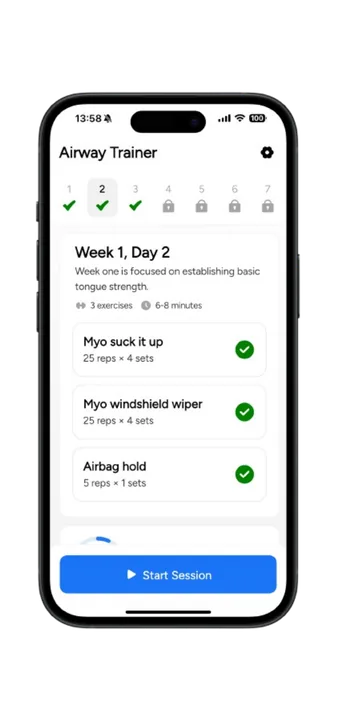
Personalized 6-week plan
Built around the weak points your assessment uncovers, so day one already targets what is actually driving your snoring.
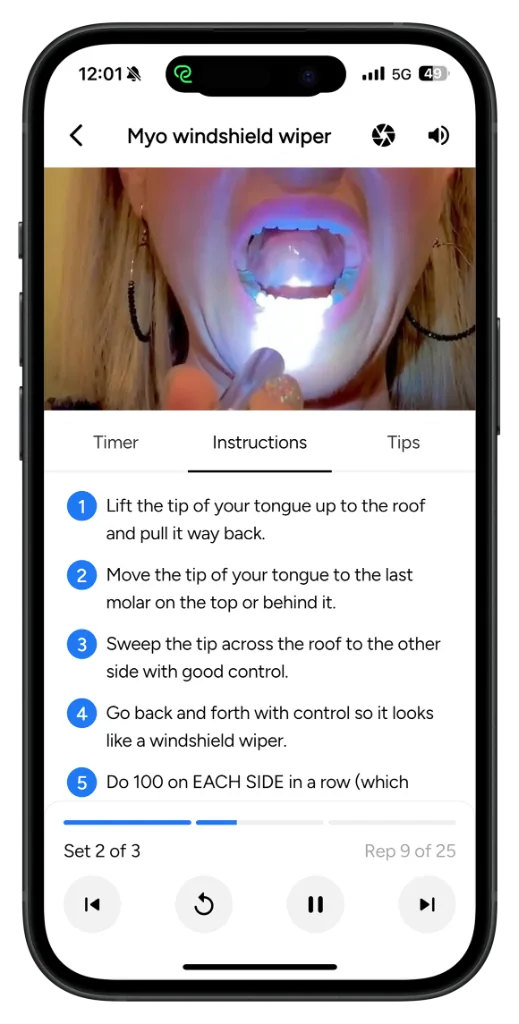
Video-led exercises
Each exercise is demonstrated on screen with a timer. No awkward tongue-on-phone interaction.
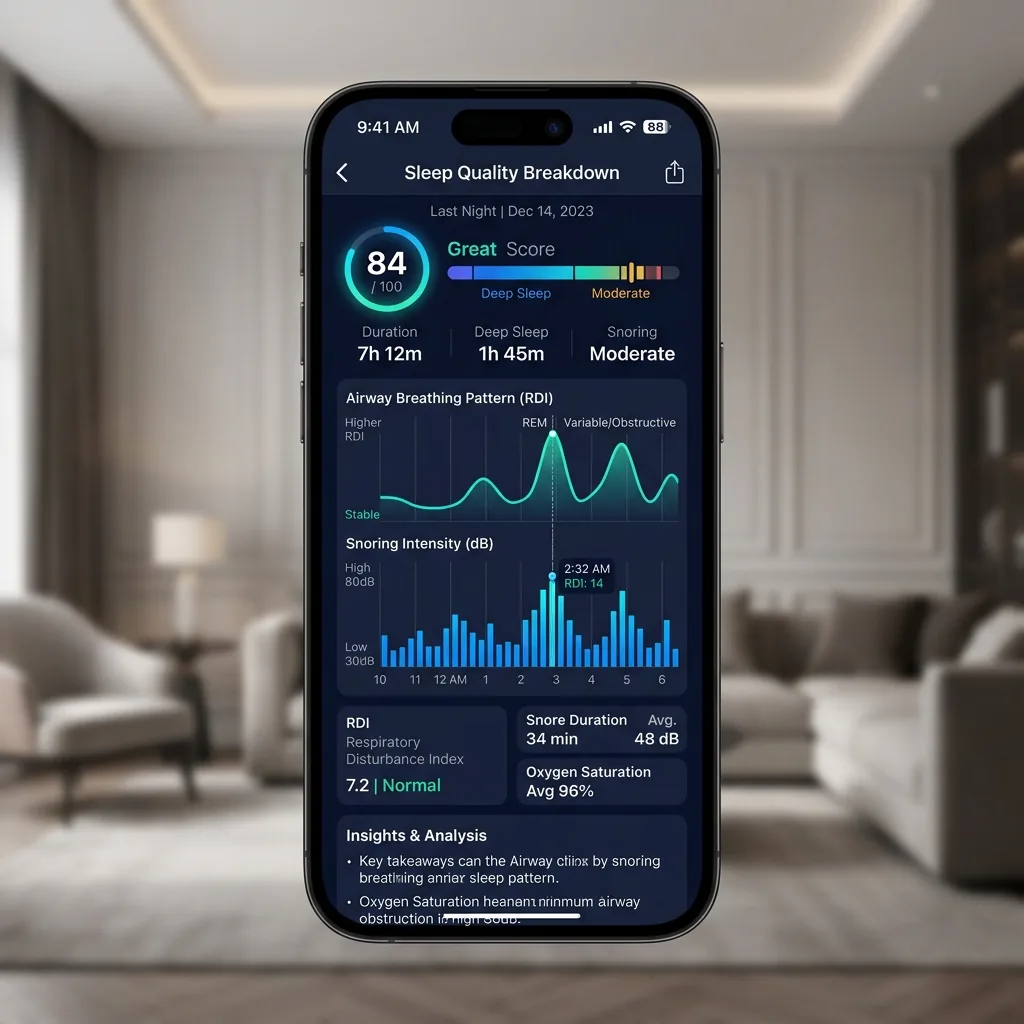
Track the science behind it
See the research and progress that backs your personalized routine.
See it for yourself. Airway Trainer is free to download.
The science behind the exercises
Why mouth and throat exercises actually work
Both apps draw from the same body of research. These videos give you the background so the daily practice makes sense.
Featured
Exercises for snoring and sleep apnoea
A broad look at why oropharyngeal and myofunctional exercises help with snoring, the evidence base both apps sit inside.
Throat exercises for snoring and sleep apnoea
Quick context on the tongue, palate, and throat exercises that drive results.
Skip the theory
Try the routine yourself, free.
Airway Trainer is free to download on iPhone and Android. Start the guided plan in under a minute.
Airway Trainer
Pros
- Personalized plan that targets the exact weak points contributing the most to your snoring
- Free to download, try the app before paying
- Short 5 to 10 minute daily routine designed for adherence
- Video and animation-led exercises, no tongue-on-screen interaction
Cons
- Premium content uses in-app purchases
- No built-in clinician portal
- Relies on the broader myofunctional therapy evidence base rather than an app-specific RCT
Airway Gym
Pros
- A pilot randomized controlled trial used AirwayGym
- Trainer account model for clinician oversight
- Multi-language interface
Cons
- One generic protocol for every user, no personalization to your specific weak points
- Paid upfront, no free way to try the app first
- Some exercises involve tongue or chin contact with the phone
- Longer daily commitment may be harder to sustain
Medical note
Snoring can be simple vibration, but it can also be a warning sign of obstructive sleep apnea. Apps can support education and adherence, but they do not diagnose or replace treatment. Seek clinical advice for gasping, choking, witnessed pauses, morning headaches, high blood pressure, or strong daytime sleepiness.
Sources
Airway Trainer on the App Store
Official iOS listing for Airway Trainer.
Airway Trainer on Google Play
Official Android listing for Airway Trainer.
Airway Gym FAQ
Used for program structure, trainer account model, and phone-based exercise interaction.
JMIR mHealth and uHealth pilot RCT
AirwayGym pilot randomized controlled trial in severe obstructive sleep apnea-hypopnea syndrome.
Cochrane review on myofunctional therapy
Background evidence on mouth and throat exercises for obstructive sleep apnea.
Airway Gym vs Airway Trainer FAQs
Is Airway Gym free?
No. Airway Gym is sold as a paid app. Pricing on the app stores can change, so check the live listing for the latest details.
Does Airway Gym have better research than Airway Trainer?
Airway Gym has a more direct app-specific research story. A 2020 pilot randomized controlled trial used AirwayGym. Airway Trainer is built on the broader, well-established evidence base for oropharyngeal and myofunctional therapy exercises, the same family of exercises both apps teach. The difference is how those exercises are applied: Airway Gym runs the same fixed protocol for every user, while Airway Trainer personalizes the plan to the specific weak points contributing the most to your snoring.
Which app is easier to try first?
Airway Trainer is easier to try first because it is free to download on both iOS and Android, with optional in-app purchases. Airway Gym requires paying before you can use the app.
Is Airway Trainer available on iPhone?
Yes. Airway Trainer is available on the App Store for iPhone and on Google Play for Android.
Can either app replace CPAP or medical care?
No. Snoring and sleep apnea can be medical issues. These apps may support airway exercise habits, but diagnosed sleep apnea, gasping, choking, witnessed pauses, or major daytime sleepiness should be discussed with a qualified clinician.
Keep comparing
Other snoring apps people weigh against Airway Trainer
Exercise app vs exercise app
SnoreGym vs Airway Trainer
SnoreGym is built by the SnoreLab team and runs the same workout for every user, twice a day. See how that compares to a personalized 6-week plan.
Read comparisonLeveled progression vs targeted plan
SnoreFree vs Airway Trainer
SnoreFree teaches 48 video exercises across 4 graduated levels in English, German, and Spanish. See how its leveled system compares to a personalized 6-week plan.
Read comparisonStart tonight, for free
Download Airway Trainer on iPhone or Android, open the guided 6-week plan, and do tonight's session in under 10 minutes. No upfront payment to see what you're getting.